A sharp picture: 12 tips

(Thursday, March 11th, 2010)

The plague of many photographs and photographic hardware devices is of not being able to produce nicely sharp pictures, nearly crunchy images (Nota bene: I do understand that this is not the ultimate goal of a photographer and that many a picture is technically mediocre or fuzzy or foggy and still is a great photograph).

A few tips and tricks I grouped for you in order to reach the maximum possible sharpness on your photos (and my photos):

  • Light: Darkness is not favorable; It brings fuzziness when the subject moves and a difficult automated focus.
  • Speed: A fast shutter speed is good to freeze the subject in place.
  • tripod: In order to be stable, there is no better solution than screwing the camera to a good old sturdy tripod.
  • ISO: Choose a sensitivity high enough for the shutter to stop all movement, but not too high (to avoid blowing the digital noise up).
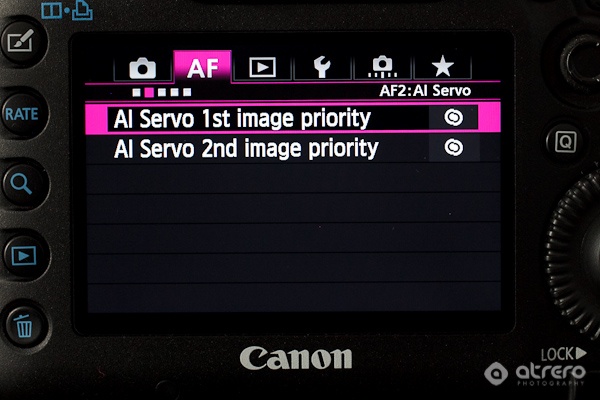
  • Autofocus: An AF finely tuned (for those who have micro-setting of the AF), using the AF in the right mode (according to the subject -moving or not- there are different AF modes on your SLR).
  • Autofocus Zones: The choice of the AF zone(s) is also critical (it is all too often to focus on the background rather than the model). It is quite important to focus on the eye of the subject rather than on the nose.
  • Subject: If everything else is already optimized (especially in low light), make sure that the subject itself does not move.
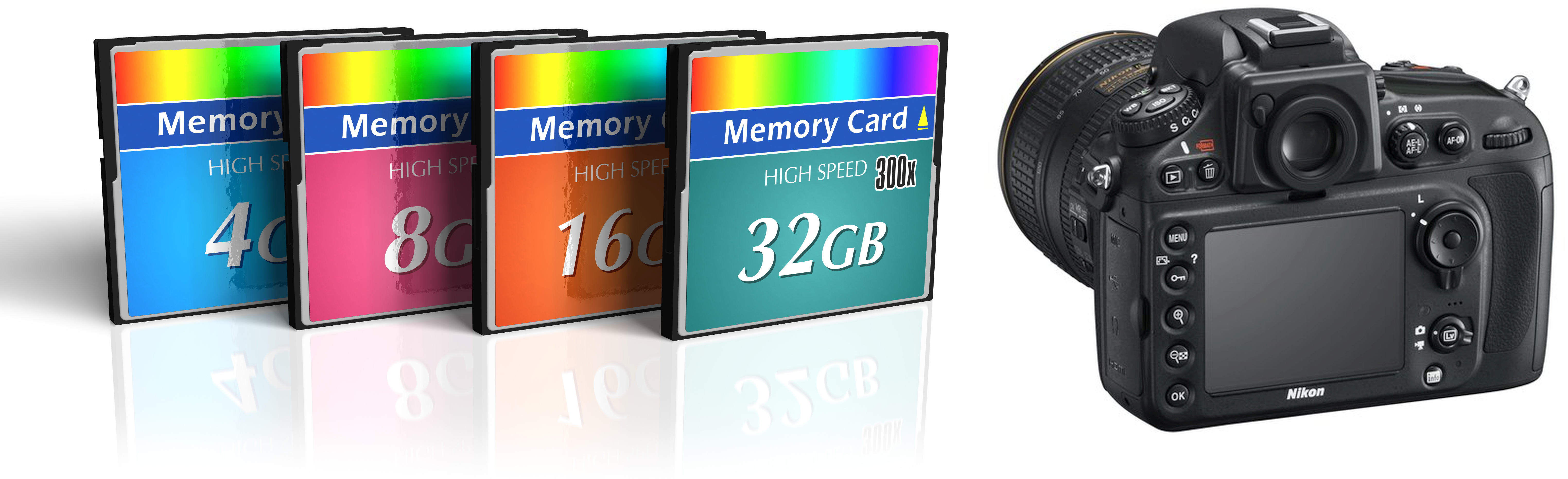
  • Sensor: Of course, use a camera whose sensor is as high resolution as possible; But do not let figures fool you: The more resolution, the more digital noise. do not use a 10MP+ P&S, or a 18MP+ D-SLR with an ASP-C sensor, for example).
  • Lens: It’s always better to use a lens with a pro sharpness (and a pro price, too) but each glass has its optimal conditions for use (hardly the full aperture, often not the most closed diaphragm).
  • Filter: shun unnecessary filters (like the Skylights or the UVA/UVB) or low quality filters (who add their own optical defects to those from the lens).
  • Software: Do not push to the limit of the noise reduction software settings (while NR crunches noise, it also removes details and image crunchiness).
  • Format: Avoid JPEG or use JPEG at a low compression rate (the compression artifacts start by eroding the fine quality of your image). Stay in RAW (or in TIFF)

11 ways to be a photo Jedi

(Sunday, January 31st, 2010)

Photography is an art that needs to be learned. Like the Jedi knights of Star Wars, you need to go through a long learning phase and you may become a true Master.

However, this goes through respect for the rules of the photo Jedi.

1. Learn, Young Padawan

A photo Jedi is not taught, he has to keep learning. He has to keep his eye open for the wisdom of older knights, famous photographers. Always come back to the old masters, search and analyze their pictures for what makes them great. You have to acquire an internal feeling for what will make your photos great.

At first, the photo Padawan is only able to watch and fail. But hard work here will open the path to Jedi knighthood.

Jedi or Sith?
Creative Commons License photo credit: turoczy

2. Do or do not. There is no try

Don’t try to be a good photographer. Become a good photographer.

The Jedi photographer is all about creating great pictures. The master Jedi photographer has recognized that he must be really willing to be one.

If the photo is not as perfect as you want it to be, shoot again. Now!

If the subject is not there when you want it, come back later to shoot it right.

If the light is not the right one, don’t shoot a mediocre picture, wait for the best light.

3. Beware the dark side

Where the Force is, the dark side is too.
Where the light is, the darkness is too.

Of course, you want to ensure that the dark areas of your digital photographs are well exposed and you should learn how to use the histogram and the blinking areas showing underexposed (and overexposed) of your picture on the LCD of the photo camera.

But also, don’t fear the other photographers. There is no competition. Each photo Jedi has his own path. The photo masters are not there for you to feel small and incompetent. They show what can be done with patience. And, don’t shout if you don’t become a photo Jedi master overnight.

Don’t anger when people criticize your pictures. Learn to hear why they dislike your images. Even better, go and show your photos. Ask for the feedback from other photograph Jedi knights in order to learn even more.

(more…)

Save a drowned camera or lens

(Friday, January 29th, 2010)

You just dropped your photo camera or a lens in water; What can you do now if it was not weather-sealed or water-tight?

The first thing to do is to remove all electrical power source. Electricity does ugly things to metal and electronics. So, start by removing the batteries right now. You may be able to dry them separately, but you’d better be ready to buy new ones (the heavy humidity may damage them too much even if they survive).

Riz long grain - Copyright 漏 2007 David Monniaux

Riz long grain - Copyright 漏 2007 David Monniaux

Next, you need to dry the camera. As soon as possible. First, use sponge, them some absorbing paper (possibly toilet paper, you will find it nearly everywhere in the world). Try to shake the camera a little, but not too much (you don’t want to drop your camera in the water again!)

After that, a little heat will help. Water will evaporate more easily with warm temperature in a dry air. Avoid at all costs to leave the photo camera on whatever heating system you may find. But a few hours in a warm room will help…

But this will probably not be enough. The finishing touch will be to dip your camera into a bag of rice. This is about the same tip as the one used for the salt in your kitchen or on your table: a little white rice will capture the humidity from the salt crystals and leave it dry. Put your camera in an uncooked rice bag for a week; This may not be very elegant, but it will be do the job for a very little cost.

Only then will you try to insert a battery again. You are never sure that it will work, but all these steps will have tremendously improved the odds.

Inform us, but leave no trace

(Wednesday, January 20th, 2010)

Cloak-and-Dagger-1946

Some of you may be interesting in giving us some information leaks. It may seem that your privacy may be difficult to be kept in the process, but there are a few ways to protect it.

I can give you some information and some advice.

  • I would not divulge the sources of my information if you merely ask me to keep it quiet.
  • Use the contact form providing a wrong address (please, make it clear in the text).
  • If you feel that this is not enough (or if the information you are providing would be really asking for additional protection), you can send email to Yves2006@YLovePhoto.com (just replace 2006 with this year, 2009 or 2010, to make it actual), without leaving traces by using one of the following services:
  • You can also send us paper mail. It may be very ‘old economy‘-like, but it’s quite safe to understand that I will not keep the document for more than a few hours. And it won’t allow to track you…
  • You can also install a system enabling its users to communicate anonymously on the Internet, like TOR which will bring an additional level of security and anonymity, but at the price of a much higher complexity.

Feel free to use or adapt these advices. For my part, I will do my best to ensure that our exchanges will do you no harm.

All that being said, remember that I always prefer a well-known source (if not 100% identified) and I may chose not to publish some leaks when I do not feel sufficiently at ease with its origin and/or credibility.

Mountain photography from a small plane

(Wednesday, November 4th, 2009)

Dorje-Lapka

Dorje-Lapka

When you are in a plane of a light plane flying near a mountain range, it is quite tempting to shoot a few landscape photos; But the conditions will stay very difficult for the photographer. There are many traps and the results may loose a lot of quality compared to what you expected.

For example, problems could be:

  1. The presence of visible obstacles
  2. The atmospheric turbulence
  3. The atmospheric veil
  4. The vibrations of the plane
  5. The optical limitations of the cabin window

First, you must be seated near a window (and on the right side) and you must avoid the presence of the wing and/or an engine which could reduce the view. Choose your seat wisely at check-in time or politely negotiate with the passenger better seated.

The engines of the plane produce a lot of air turbulence that is very perceptible just behind them. Seat sufficiently in front (unfortunately, the more expensive seat are often in the front of the plane).

Air moisture and dust are less problematic at high altitude than at ground level, but you will probably shoot your landscapes from very far. Only when the sky is very clear can you try a flight. Then you would limit the atmospheric veil to its minimum. It’s even better to fly early in the morning (the light is nicer and the air moisture is still mostly on the ground). Chance must fly with you (or you will have to compensate with perseverance).


Melungtse - avec filtre polarisant

Melungtse - with a polarizing filtrer and some Photoshop correction

Melungtse - sans filtre polarisant

Melungtse - without a polarizing filter, but shaded by the window

Then, a plane shakes a lot. Even more when it’s a small plane. Not as much as a helicopter, but it is definitely not stable! So, choose a fast shutter speed. Worse: Those vibration frequencies are not well compensated by the image stabilizer of your camera or lens; They are targeting the smoother moves of the photographer. For an 80mm lens, I would advise faster than 1/200 s; For a 35mm, faster than 1/100 s. You may have to crank your ISO up a little for that.

But the biggest interference will probably be the window itself. Nothing much you can do: It is not a neutral photo filter. It will darken irregularly the image. It is not really compatible with polarizing filters (color shift and forced shading in the sky part of the image). It usually has a lot of scratches and stains (those inside may be cleaned, but going outside is tougher…)

(more…)

Theft-protected, an ugly camera

(Tuesday, October 20th, 2009)

This is one surprising idea: Make your expensive camera so ugly that nobody will try to steal it.

Ugly_Camera

This is the extremist extension of a solution I already use: In order to reduce the risk of theft, you can use gaffer tape and cover all distinctive marks and logos. Your SLR may still look bulky, but it will not be recognizable. And it has also the advantage of including the protection of small connectors or covers (and locking down some buttons you don’t want to see moving without your explicit intent).

gaffer_camera.gif

Very good tip for photo travelers.

Going through Customs with a photo bag

(Sunday, October 18th, 2009)

douane

When you’re traveling far in order to satisfy your complementary needs for exoticism and photography, you will have to go through the Customs and/or boarding controls of the airplane. A few things would be good to keep in mind in order to ensure this is a better experience. Here are mine:

  • Pack everything really fragile in your cabin luggage, but only that: Your lenses are fragile, but your tripod is not.
  • Make sure that all cameras have charged batteries (if you are requested to prove their correct operation).
  • If you still use film, ask for a manual screening to avoid burning them through the X-ray machine.
  • Have all invoices in a pocket (not in the bag in order to limit the consequences of always possible robbery). Customs may want a proof of purchase/cost/taxes and this could avoid your re-paying of heavy customs taxes.
  • Avoid adding a couple of under-the-counter Flash cards from a tax-free country, that may attract the attention of the Customs officer and make them suspicious. You’ll buy cheap during another trip wiht less sensitive hardware…
  • When you are checking-in, politely ask if you can keep the bag as cabin luggage (always ask first, always smile and be polite). You should make it look like a small bag even if it is big and heavy (stand up, shoulders high, bag hung on 1 shoulder only, as if it was empty). If accepted, you win.
  • If not, politely inform the person that the bag contains expensive equipment. In the extreme, you should be ready to ask for insurance to cover the cost of your photo equipment (this last step is often enough to bring a closure to a possible confrontation).
  • In some countries or on some short flights, it may be possible (or necessary if the plane is real small) to purchase an empty seat for a few bags (share with fellow photographers).
  • Be sure that whatever weight, your photo bag stays within the size limits (115 cm adding all sides), it is easier to solve things this way.
  • Never fly with companies that enforce brutally the cabin luggage weight limit. The list may be changing in time, but two companies actually stand out: British Airways seems to be the nightmare of heavy luggage (no more than 5 kg even with a pro Id card and pre-organized pro-check-in; I know a couple of pros who will take a longer flight just to avoid them) and RyanAir (and many low cost companies) finds all possible ways to make you pay taxes on top of your ticket cost. In any case, check in advance with the company (or your travel agent if they are used to photo trips and photo customers).
  • Always be polite. Remember that the person in front of you has to power to ruin your photo trip.

With this it is easier to travel and shoot photos. Do you have some other tip to share?


Shopping mall

All the shops

Posters, cards, prints, etc.

Mugs, T-shirts, etc.

Books

Buy my art  

Travel

Use » Travel »

YLovePhoto